
Smoke alarm installationin Cwmbran, positionedto give early warning
Get warned early, wherever a fire starts. Interlinked smoke and heat alarms placed in the right rooms, wired correctly and tested, so every alarm sounds when one does.
NAPIT Approved · £2m public liability · 12-month guarantee
Over 15 years
In the industry
NAPIT Approved Contractor
Reg. no. 63450
Part P Registered
Via NAPIT scheme
£2m Public Liability
Fully insured
12-Month Guarantee
On workmanship
Service overview
Smoke Alarm Installation: what it is and when you need it
What smoke alarm installation covers
Supplying and fitting smoke alarms, heat alarms and, where appropriate, carbon monoxide alarms. Alarms can be mains-powered with battery backup, or sealed-battery units that link wirelessly. Interlinked systems mean that when one alarm detects smoke or heat, every alarm in the property sounds.
Who it is for
Homeowners wanting better protection, landlords meeting their obligations for rented homes, people renovating or extending, and households with older or single, standalone alarms that may no longer be working reliably.
When to install or upgrade
When alarms are missing, past their replacement date (typically around ten years), not interlinked, or not covering the right rooms. A rewire, extension or loft conversion is also a natural time to upgrade.
Why correct installation matters
An alarm in the wrong place can be slow to detect fire or cause constant false alarms, leading people to disconnect it. Correct type, position and wiring make the difference between an alarm that protects and one that gets taken down.
What happens if it's ignored
The risks of putting it off
An alarm you can't hear, or one that's been disconnected because it keeps going off, offers no protection when it matters.
Late warning
A fire starting in a kitchen or living room may not be heard upstairs without interlinked alarms.
Expired detectors
Sensors degrade with age. Old alarms may not respond as they should.
False alarms
Smoke alarms placed too close to kitchens or bathrooms trigger often, and are then disabled.
Landlord obligations
Rented homes need working alarms. Missing or faulty ones can leave landlords exposed.
Common mistakes to avoid
- Fitting a smoke alarm in a kitchen, where a heat alarm is more suitable.
- Removing batteries to stop nuisance alarms.
- Relying on one alarm for a whole house.
- Never testing alarms or noting their replacement dates.
Our process
How the job is done, step by step
01
Survey
The layout of the property is reviewed to decide alarm types and positions.
02
Recommendation
You're advised on mains or wireless interlinked options and a clear quote is provided.
03
Installation
Alarms are fitted and, where mains-powered, wired to a suitable circuit.
04
Testing
Every alarm is tested individually and as an interlinked system.
05
Handover and guarantee
You're shown how to test them, and work is backed by a 12-month workmanship guarantee.
Benefits
What you get when it's done properly
Early warning
Interlinked alarms sound throughout the home, wherever the fire starts.
Right alarm, right room
Heat alarms in kitchens, smoke alarms in hallways and living areas.
Fewer false alarms
Correct positioning reduces nuisance triggering.
Reliable power
Mains alarms with backup don't rely on remembering batteries.
Peace of mind
Know that your family or tenants are protected.
Simple to maintain
Clear guidance on testing and replacement.
In detail
Smoke and heat alarms: types and placement
Smoke alarms versus heat alarms
Smoke alarms detect smoke particles and suit hallways, landings and living rooms. Heat alarms respond to a rapid rise in temperature and are better suited to kitchens, where cooking fumes would trigger a smoke alarm. Using both, interlinked, gives broad coverage.
Mains-powered and wireless interlinked
Mains-powered alarms are wired into the electrical installation with a battery backup. Wireless interlinked alarms use sealed long-life batteries and link by radio, which can be less disruptive in finished homes. Thomas will explain which suits your property.
Positioning
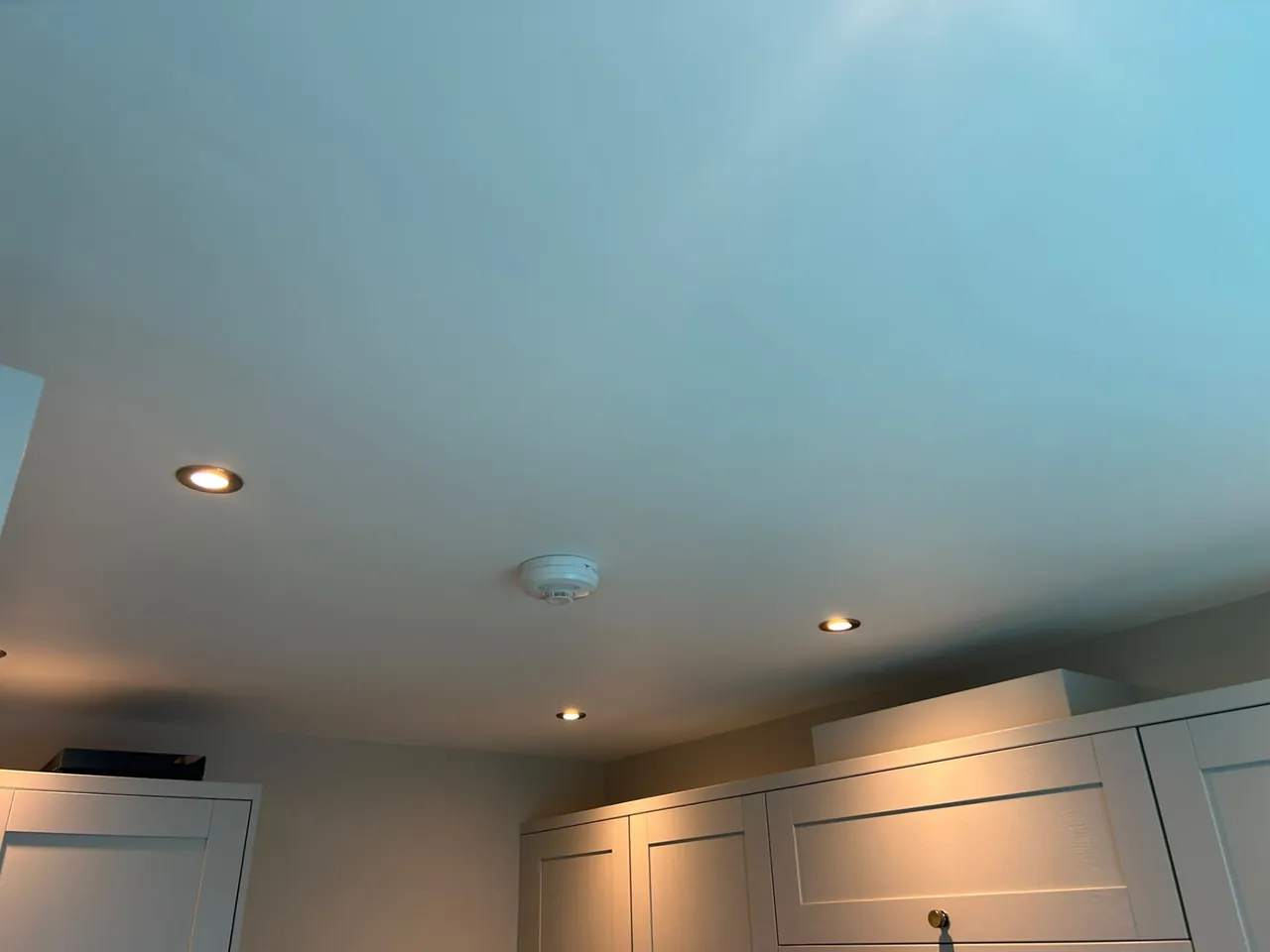
Alarms are normally ceiling-mounted, away from walls and corners where air can be still, and away from bathrooms and kitchens for smoke alarms. Each floor, the escape route and principal living areas should be covered.
Carbon monoxide alarms
Where a property has fuel-burning appliances such as gas boilers, fires or wood burners, carbon monoxide alarms are an important addition and can often be linked to the same system.
Rented homes and businesses
Landlords need working alarms in their properties, and they are commonly checked at the start of a tenancy. Commercial premises usually require a designed fire alarm system, which is a separate specialist area; ask if you're unsure what you need.
Advice for landlords
Landlords can arrange installation around tenants, with access agreed in advance. Once the alarms are fitted and tested, you receive confirmation of the work for your records, which is useful at the start of each tenancy and when letting agents ask for evidence.
Upgrading old standalone alarms
Many homes still have one or two standalone battery alarms that are well past their replacement date and only sound in the room where they are fitted. Replacing them with an interlinked system means that a fire starting downstairs at night will sound the alarm on the landing and in the bedrooms too, giving everyone in the house more time to get out safely. The upgrade is usually quick and causes very little disruption.
Testing and looking after your alarms
Interlinked alarms should be tested regularly by pressing the test button on each unit; with an interlinked system, all of them should sound together. Keep the alarms free of dust, don't paint over them, and note the replacement date marked on each unit. Mains alarms have a backup battery, and a regular chirp usually means that battery or the alarm itself needs attention. At handover you'll be shown exactly how your system works.
Alarms during a rewire or renovation
When walls and ceilings are being opened up for a rewire, extension or loft conversion, it's the ideal time to fit mains-powered, hard-wired interlinked alarms. Cables can be run neatly out of sight, and alarm positions can be planned around the new layout, including any new rooms and the escape route from upper floors.
Choosing between options
For an occupied, decorated home where cables would be difficult to hide, wireless interlinked alarms avoid disturbing finished walls and ceilings. For properties being rewired or refurbished, hard-wired alarms are often preferred. Either way, the important thing is the right type of alarm in the right place, linked so every alarm sounds together.
Why VE Electrical
Smoke Alarm Installation from the electrician who does the work
VE Electrical Services is owner-led. When you book smoke alarm installation with us, the person who quotes the job is Thomas Villars: the same fully qualified, NAPIT-registered electrician who carries it out, tests it and signs it off. There is no hand-off between a salesperson and a fitter, and no call centre between you and the answers you need.
Thomas has over 15 years' experience in the industry and set up the business eight years ago in Cwmbran. The business is a NAPIT Approved Contractor (registration no. 63450), Part P registered, carries £2 million public liability insurance and is a TrustATrader member. Every job is backed by a 12-month workmanship guarantee.
Quotes and site visits are always free. You get honest advice on what is needed, a clear price before work starts, and certification when the job is complete. For larger projects, trusted subcontractors are brought in, with Thomas remaining your single point of contact from start to finish.
FAQ
Smoke Alarm Installation questions
How much does smoke alarm installation cost?
+
It depends on the number and type of alarms and whether they're mains or wireless. Quotes are free.
How long does it take?
+
Most homes are completed within a day, often less for wireless systems.
Do I need mains-powered alarms?
+
Not always. Wireless interlinked alarms with sealed batteries can be a good option in finished homes. You'll be advised on what suits your property.
How many alarms do I need?
+
Typically at least one on each floor, in the main living area, in the hallway and a heat alarm in the kitchen. Your layout determines the exact number.
How often should alarms be replaced?
+
Most alarms are designed to be replaced around every ten years. The date is usually marked on the unit.
Is the installation guaranteed?
+
Yes. All work carries a 12-month workmanship guarantee.
Can you fit alarms in rental properties?
+
Yes. Landlords can arrange installation with access agreed with tenants.
Do you cover Pontypool and Abergavenny?
+
Yes, along with Cwmbran, Newport, Cardiff, Monmouth, Pontypridd, Bristol and surrounding areas.
Related services
Areas covered
Smoke Alarm Installation from our Cwmbran base across South Wales and Bristol.
Protect your home with early warning
Get a free quote for interlinked smoke and heat alarms fitted correctly. Quotes and site visits are always free.
NAPIT Approved Contractor no. 63450 · £2m public liability · 12-month workmanship guarantee